
The transition from a general university education to a high-stakes professional career is often described as a “leap,” but for the most successful students, it is more like a well-planned climb. In a global economy that is increasingly automated and data-driven, the “generalist” is finding it harder to compete. Whether you are aiming for a seat at a top-tier law firm or a leadership role in a tech startup, the decision to specialize early is one of the most significant strategic moves you can make during your undergraduate years.
But what does specialization actually look like in practice? It isn’t just about picking a major; it’s about deep-diving into a niche that makes you indispensable before you even have a degree in your hand.
The Shift from Generalist to Specialist
For decades, the standard advice for university students was to get a “broad” education. The idea was that a wide net would catch more opportunities. However, the modern job market works differently. Recruiters today use sophisticated algorithms and AI-driven filters to find candidates with specific skill sets. If your resume says “Business Administration,” you are competing with millions. If it says “Supply Chain Logistics for Renewable Energy Markets,” you are competing with a few hundred.
Early specialization allows you to build a narrative. It tells a story of intent. When you focus on a specific area—be it corporate litigation, fintech, or international trade law—you aren’t just a student; you are a specialist in training. This focus allows you to seek out specific internships, join relevant professional bodies, and network with the right people long before graduation day.
Navigating the Academic Pressure Cooker
The path to specialization isn’t easy. It requires a much higher level of dedication than a general degree. You aren’t just skimming the surface of your textbooks; you are expected to analyze complex case studies and master intricate financial models. This is where many students hit a wall. The sheer volume of research required can become overwhelming, leading to burnout.
Smart students realize that specialization is a marathon, not a sprint. Managing your time effectively is the only way to survive. To keep their focus on high-level concepts rather than getting bogged down in the minutiae of formatting and basic research, many top-tier students lean on professional support. Finding a reliable university assignment helper can be a game-changer, allowing you to delegate the heavy lifting of routine coursework so you can spend more time on the specialized projects that actually build your professional portfolio.
The Strategic Advantage in the Legal Field
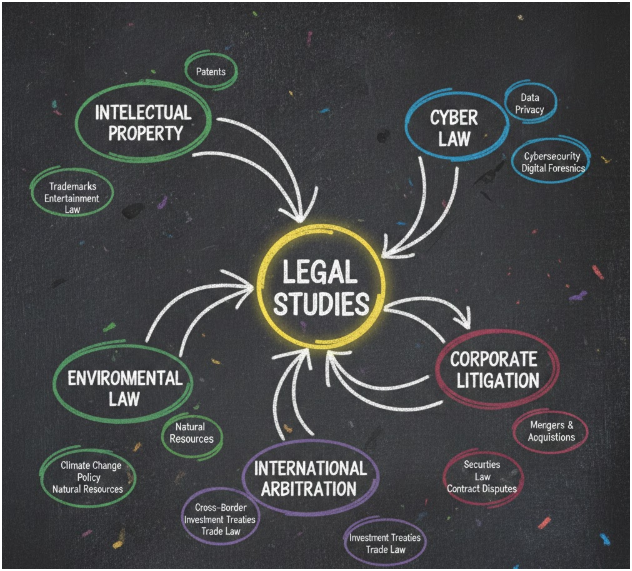
In the legal world, specialization is almost mandatory. The law is too vast for any one person to master entirely. By choosing a niche like Intellectual Property (IP), Environmental Law, or Cyber Law early on, you position yourself as an expert in a field that is currently in high demand.
However, the barrier to entry in law is notoriously high. The writing requirements are grueling, requiring a level of precision that most undergraduates haven’t yet mastered. You have to understand not just the “what” of the law, but the “why” and the “how” of its application. Because the stakes are so high—where one wrong citation can tank an entire argument—many aspiring attorneys seek expert guidance.
Utilizing a professional law assignment writer is often less about “getting the work done” and more about learning the craft of legal drafting from someone who already knows the ropes. It provides a template for how a professional legal argument should be structured, which is an invaluable learning tool for an undergraduate student.
See also: Health Data and Technology Integration
Global Trends: Why “Global” Matters
We no longer live in a localized economy. A business student in Mumbai might be working for a firm in London, managing a supply chain that runs through Southeast Asia. Early specialization in “Global Business Strategy” or “International Arbitration” prepares you for this reality.
Students who understand global trends—such as the impact of ESG (Environmental, Social, and Governance) criteria on corporate investment—are far more attractive to multinational corporations. These companies aren’t looking for someone they need to train from scratch; they want someone who understands the global landscape and can contribute on day one.
Networking: The “Hidden” Benefit of Specialization
When you are a generalist, your “network” is just your classmates. When you are a specialist, your network becomes the industry. If you specialize in “Digital Marketing Analytics,” you start attending webinars, joining LinkedIn groups, and reading journals specifically for that niche.
You begin to speak the language of the industry. This “insider language” is what sets you apart during interviews. While other candidates are talking about “marketing,” you are talking about “conversion rate optimization” and “attribution modeling.” This level of specificity signals to an employer that you are already part of their world.
Overcoming the “Jack of All Trades” Trap
There is a common fear among students that specializing too early will “pigeonhole” them into a career they might eventually dislike. However, the opposite is usually true. Specialization teaches you how to master a complex subject. Once you have mastered one niche, the skills you used to get there—deep research, technical writing, and industry analysis—are highly transferable.
The “Jack of all trades” often finds themselves in entry-level roles for years because they don’t have the “edge” required for a promotion. The specialist, conversely, enters at a higher tier and has a clearer path to leadership.
How to Choose Your Niche
If you are an undergraduate unsure of where to focus, look at the intersection of three things:
- Market Demand: What are the “pain points” for businesses right now? (e.g., Cybersecurity, Sustainability, AI Ethics).
- Your Natural Interest: What can you read about for hours without getting bored?
- Complexity: Choose something that is hard to learn. If it’s easy, everyone will do it, and the “edge” will disappear.
Practical Steps for Undergraduate Students
- Audit Your Future Resume: Look at job postings for the roles you want five years from now. What specific skills do they ask for? Start learning those now.
- Seek Mentorship: Find a professional in your chosen niche and ask for twenty minutes of their time. Most people are happy to help a student who shows genuine interest in their specific field.
- Balance Your Load: Don’t let your grades slip while you chase your niche. Use academic resources and professional services to maintain your GPA so that your specialization is backed up by a strong academic record.
- Build a Portfolio: Don’t just study; do. Write articles, start a niche blog, or take on a small freelance project in your specialized area.
Final Thoughts
The goal of university isn’t just to get a degree; it’s to launch a career. By specializing early in law or business, you aren’t narrowing your options—you are sharpening your focus. You are moving from the “applicant pool” to the “shortlist.
About The Author
Hi, I’m Mark! I am an academic consultant and lead researcher at MyAssignmentHelp, where I’ve spent the last several years helping students bridge the gap between complex university theory and real-world professional application.