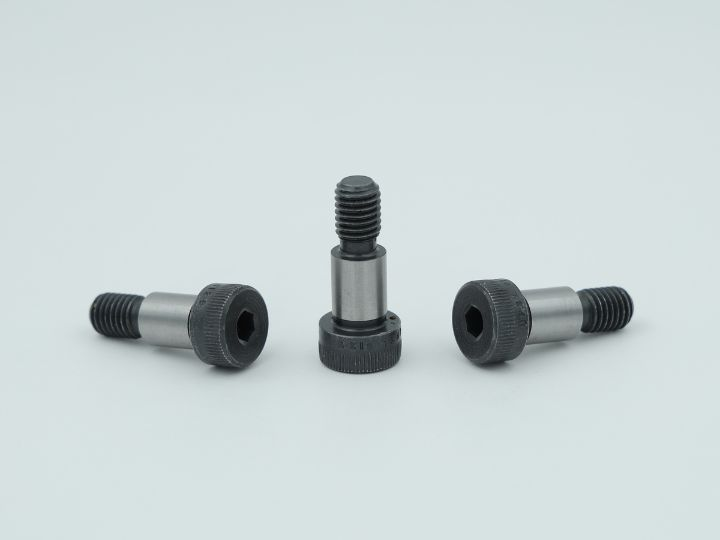
Fasteners do not get much attention outside of engineering circles, but they contribute to the foundational role they play in holding complex systems together. In aerospace and heavy industrial environments, the reliability of a single fastener can have a direct impact on safety, performance, and durability. NAS1801 high-strength hex head screws are developed especially for this kind of demanding applications where standard hardware cannot provide reliable results.
Developed according to high aerospace standards, these NAS1801 screws are a combination of high material strength and high dimensional control. Their design enables them to operate reliably in high loads, vibration and repeated stress cycles.
What Are NAS1801 High-Strength Hex Head Screws
NAS1801 screws are members of the National Aerospace Standard (NAS) range of fasteners. These standards were developed to maintain uniformity, precision and mechanical reliability for components that are used for aerospace and related industries. Unlike general-purpose fasteners, NAS-specified screws are produced to strict tolerances and are subject to strict quality checks.
The NAS1801 design has a hex head where controlled torque application with standard tools can be used. It also has a cruciform recess, which aids to accurate engagement during installation. The screw has a full thread so that even the load can be distributed over the joint. Together, these features aid in producing stable connections in assemblies where mechanical failure is not an option.
Material Selection and Mechanical Strength
One of the defining characteristics about NAS1801 screws is the material choice. They are usually fabricated using high grade alloy steels such as AISI 4140, 4340 or 8740. These materials are chosen because of their combination of strength, toughness and resistance to mechanical wear.
After machining, the screws are heat treated for better tensile and yield strength. This process helps them to reach tensile strengths of around 160 ksi, which makes them suitable for high-load applications. The ability to withstand such forces guarantees that the fastener retains integrity even in extreme operating conditions.
Precision Manufacturing and Tight Tolerances
In aerospace and industrial assemblies, as important as strength is precision. Components are often designed to have tight dimensional requirements; any variation in fastener geometry can result in uneven stress, loosening of joint or premature failure. NAS1801 screws are made to tight tolerances to ensure a uniform and secure fit.
The full-thread configuration helps to distribute the clamping force evenly throughout the joint and to reduce the stress concentration at specific points. This level of precision plays a role in predictable performance and reduces the chance of loosening during service, even in the presence of vibration or varying loads.
Resistance to Fatigue and Cyclic Loading
Fatigue failure is a major concern in systems exposed to repeated stress. Aerospace structures, rotating machinery, and industrial equipment experience continuous loading and unloading over their service lives. Fasteners in these systems must resist fatigue cracks that can develop due to cyclic stresses.
The alloy steels used in NAS1801 screws provide excellent fatigue resistance when properly heat treated. This allows the screws to maintain performance over long periods without structural degradation. Their fatigue resistance is particularly valuable in dynamic systems where vibration and fluctuating forces are unavoidable.
Performance Under Vibration and Dynamic Conditions
Vibration is a constant factor in aerospace and industrial applications. Aircraft components experience vibration from engines, airflow, and structural movement, while industrial machinery produces continuous mechanical oscillations. Under these conditions, ordinary fasteners can gradually loosen or fail.
NAS1801 screws are designed to maintain clamping force under vibration. Their precise threads and controlled preload characteristics help prevent self-loosening. This stability reduces maintenance requirements and improves system reliability over time.
Common Aerospace Applications
In aerospace engineering, NAS1801 screws are commonly used to fasten structural components, brackets, housings, and mechanical assemblies. These fasteners are found in airframes, control systems, and engine-related components where accuracy and reliability are critical.
Because aircraft components must withstand extreme conditions including altitude changes, temperature variations, and mechanical stress, fasteners must perform consistently across all operating environments. NAS1801 screws provide the required strength and dimensional reliability for such demanding roles.
Use in Industrial Machinery and Equipment
Beyond aerospace, NAS1801 screws are widely used in industrial settings that require high-strength fastening solutions. Heavy machinery, precision tools, production equipment, and high-load mechanical systems all benefit from fasteners that can tolerate stress, vibration, and prolonged use.
In industrial environments, equipment downtime can be costly. Using fasteners with proven strength and durability helps reduce the likelihood of unexpected failures. NAS1801 screws support stable operation in applications where reliability directly impacts productivity and safety.
Installation and Torque Control
Proper installation is critical to achieving the intended performance of NAS1801 screws. These fasteners are designed to operate within specific torque ranges to achieve correct preload. Under-tightening can result in loosening, while over-tightening may damage threads or compromise joint integrity.
The hex head design supports accurate torque application using calibrated tools. This ensures that the desired clamping force is achieved consistently, allowing the screw to perform as intended throughout its service life.
Compliance With Engineering and Quality Standards
NAS1801 screws are manufactured in accordance with established aerospace standards that define material properties, dimensions, surface finish, and mechanical performance. Compliance with these standards ensures compatibility across systems and predictable behaviour in service.
Such standardisation is especially important in aerospace and regulated industrial sectors, where traceability, inspection, and quality assurance are mandatory. Fasteners that meet NAS requirements simplify system design and maintenance by offering dependable, repeatable performance.
Long-Term Reliability and Safety Impact
The true value of NAS1801 high-strength hex head screws lies in their long-term reliability. By combining material strength, fatigue resistance, and precision manufacturing, they help maintain the integrity of critical assemblies over extended service lives.
Their use reduces the risk of joint failure, minimises maintenance demands, and supports overall system safety. In industries where failure can have serious consequences, the choice of fastener becomes an engineering decision rather than a simple hardware selection.
Conclusion
NAS1801 high-strength hex head screws are essential components in aerospace and industrial fastening because they deliver consistent performance under extreme conditions. Their high tensile strength, resistance to fatigue, and precise manufacturing make them suitable for applications where reliability is non-negotiable.
By supporting secure joints in environments defined by vibration, heavy loads, and long service cycles, these fasteners play a quiet but critical role in maintaining safety and structural integrity. Their continued use across demanding industries reflects the importance of selecting fasteners that are engineered, tested, and proven for the job.