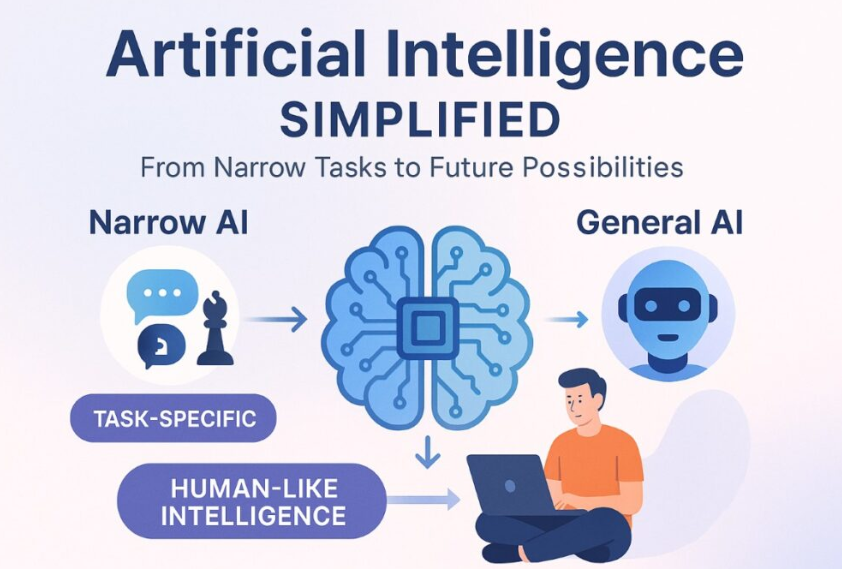
Artificial Intelligence (AI) is a technology that emulates human thought processes. It relies on algorithms to analyze data and spot patterns. At the heart of AI lies machine learning, which allows systems to improve through experience. Additionally, neural networks mimic the brain’s structure to enhance understanding of complex data. As AI continues to evolve, its applications span various fields. What implications does this have for the future?
Understanding Artificial Intelligence
As technology continues to evolve, understanding artificial intelligence (AI) becomes increasingly crucial for both individuals and industries alike.
Central to this understanding are AI ethics and AI transparency, which guide the responsible development and deployment of AI systems.
The Basics of Machine Learning
Machine learning, a subset of artificial intelligence, focuses on the development of algorithms that allow computers to learn from and make predictions based on data.
It encompasses two main approaches: supervised learning, where models are trained on labeled data, and unsupervised learning, which identifies patterns in unlabeled data.
Together, these methods empower machines to adapt and evolve, promoting autonomy and decision-making.
See also: How 5G Improves Mobile Connectivity
Exploring Neural Networks
Neural networks, inspired by the structure and function of the human brain, are a key component of modern artificial intelligence.
They consist of interconnected neural layers that process data through various pathways. Each layer utilizes activation functions to determine whether to pass information forward, enabling the network to learn complex patterns.
This architecture empowers AI to solve intricate problems and adapt efficiently.
Real-World Applications of AI
Artificial intelligence has permeated various sectors, transforming how industries operate and enhancing efficiency in countless tasks.
In healthcare innovations, AI aids diagnostics, while autonomous vehicles promise safer transportation. Smart assistants streamline daily tasks, and financial forecasting becomes more accurate through data analysis.
Additionally, personalized marketing enhances consumer experiences, and fraud detection systems protect against financial crimes, showcasing AI’s profound impact on modern life.
Conclusion
In summary, artificial intelligence operates by emulating human thought processes through algorithms, machine learning, and neural networks. Its ability to learn and adapt has led to transformative applications across various fields. Interestingly, a report by McKinsey & Company indicates that AI could potentially contribute up to $13 trillion to the global economy by 2030. This staggering figure highlights the immense potential of AI to reshape industries and improve lives, making it a pivotal force in the modern world.