You brush, you floss when you can, and you show up for checkups hoping to hear that everything looks fine. Then a dentist mentions gum pockets, bone loss, bleeding, or “we want to watch this area,” and the whole thing starts to feel less simple. That stress is real. Gum and bone changes often happen slowly, without much pain at first, so it can feel confusing when a problem shows up before you noticed anything was wrong. That’s why personalized dental care for Willingboro families can make those concerns feel more manageable.
The good news is that a general dentist does not guess. How General Dentistry Tracks Gum And Bone Health Over Time comes down to a pattern of regular exams, measurements, X rays, and comparisons from one visit to the next. That long view matters because gum disease and bone loss are usually about change, not just a single moment.
General dentistry uses small changes to spot bigger gum and bone problems
Early gum disease can look mild. A little bleeding when you floss, some tenderness, a spot that traps food more than it used to. Many people brush that off because life is busy and the symptom comes and goes. The problem is that inflammation can keep moving under the surface. The National Institute of Dental and Craniofacial Research explains that gum disease can damage the tissues and bone that support your teeth if it is not treated.
A general dentist tracks this by building a record over time. During routine visits, the dentist and hygienist look at gum color, swelling, bleeding, plaque buildup, tartar, tooth mobility, gum recession, and how your bite is wearing. They are not only asking, “What do your gums look like today?” They are also asking, “What has changed since your last visit?”
That is where people often feel caught off guard. You may hear that one area has deeper pockets than before, or that a tooth has a little more movement, or that bone levels on an X ray look lower than they did two years ago. None of that means you failed. It means your dental team is doing what a general dentist should do, which is catch progression before the damage becomes harder and more expensive to manage.
Gum measurements and dental X rays reveal what your eyes cannot
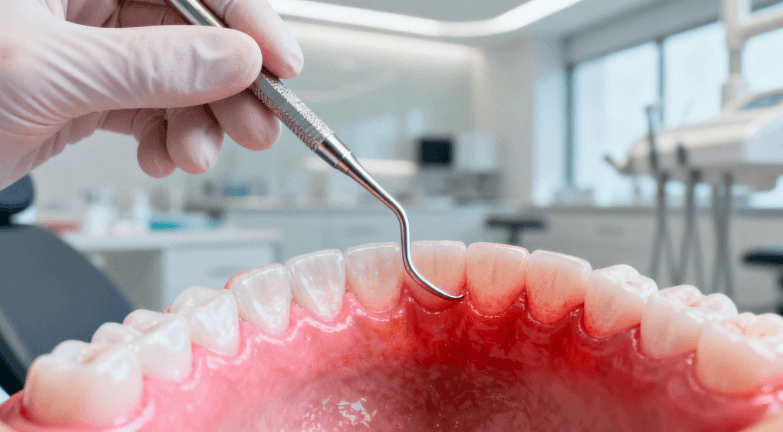
One of the clearest ways dentists monitor periodontal health is with gum pocket measurements. A small instrument measures the space between the tooth and the gum. Shallow spaces are easier to keep clean. Deeper spaces can hold bacteria and signal tissue breakdown. If those numbers increase over time, that can point to active disease or an area that needs closer care.
X rays add another layer. They help show the bone around each tooth, areas between teeth that are hard to see directly, and changes that may not be obvious in the mirror. MedlinePlus notes that a dental x ray can help detect bone loss, gum disease, and other hidden dental issues. A routine dental exam brings these findings together with what the dentist sees clinically.
This is why one clean visit is never the whole story. If your gums bleed less after improving home care, that matters. If a six millimeter pocket drops to four, that matters too. If bone levels stay stable year after year, that is a win, even if you already have some past loss. tracking gum and bone health over time is really about watching direction. Stable is different from worsening, and treatment decisions often depend on that distinction.
Consistent records make periodontal monitoring more accurate
People sometimes think every visit is the same. It is not. Each visit adds another reference point. Photos, periodontal charting, X rays, notes about inflammation, and records of past treatment all help create a timeline. That timeline becomes especially useful if you have diabetes, smoke, grind your teeth, take certain medications, or have a family history of gum disease, since those factors can affect your risk.
Consider two patients who both have mild bleeding at a cleaning. In one patient, the bleeding is new, the pockets are stable, and the X rays show no bone changes. In the other, the same bleeding comes with deeper pockets than last year and early bone loss between the back teeth. On the surface, both cases may sound similar. In practice, the second patient needs a different level of attention. That is the value of periodontal health monitoring in everyday dental care.
Home care and professional monitoring do different jobs
| What You Track at Home | What a Dental Office Tracks | Why Both Matter |
| Bleeding when brushing or flossing | Bleeding points during the exam | Home symptoms can warn you early, office findings confirm severity |
| Bad breath, tenderness, gum soreness | Signs of inflammation, infection, and plaque or tartar buildup | Symptoms tell part of the story, direct exam shows the cause |
| Teeth that feel different when biting | Tooth mobility, bite changes, wear patterns | Movement can relate to gum support, grinding, or both |
| Gums that look lower around a tooth | Measured recession and pocket depth | Visible changes matter, measurements show progression |
| Daily brushing and flossing habits | Bone levels on X rays and long term comparison records | Good habits help control disease, imaging shows hidden damage or stability |
Three practical steps help you protect gum and bone health
Pay attention to patterns, not one off moments. If your gums bleed in the same area for a week or more, if one tooth starts catching food often, or if your breath stays unpleasant despite brushing, write it down and mention it at your next visit. Small repeat changes are often more useful than dramatic symptoms that happen once.
Keep regular exams even when nothing hurts. Bone loss and gum disease can progress quietly. Skipping visits removes the comparison points that make early detection possible. A dentist can do far more with a stable timeline than with a long gap and a problem that has already advanced.
Ask for your baseline and your trend. You do not need every technical detail. Ask which areas are stable, which areas are being watched, and whether your measurements or X rays have changed since your last exam. That simple question turns a routine appointment into a clearer plan.
Steady monitoring gives you more control
Gum and bone problems feel overwhelming when they sound sudden, but they are often identified through careful tracking long before the worst outcomes happen. That is the strength of general dentistry. It watches the slow shifts, compares the details, and helps you act before a small issue becomes tooth loss or major treatment. Stay consistent with your exams, speak up about changes you notice, and use those visits to understand your trend, not just your snapshot.